

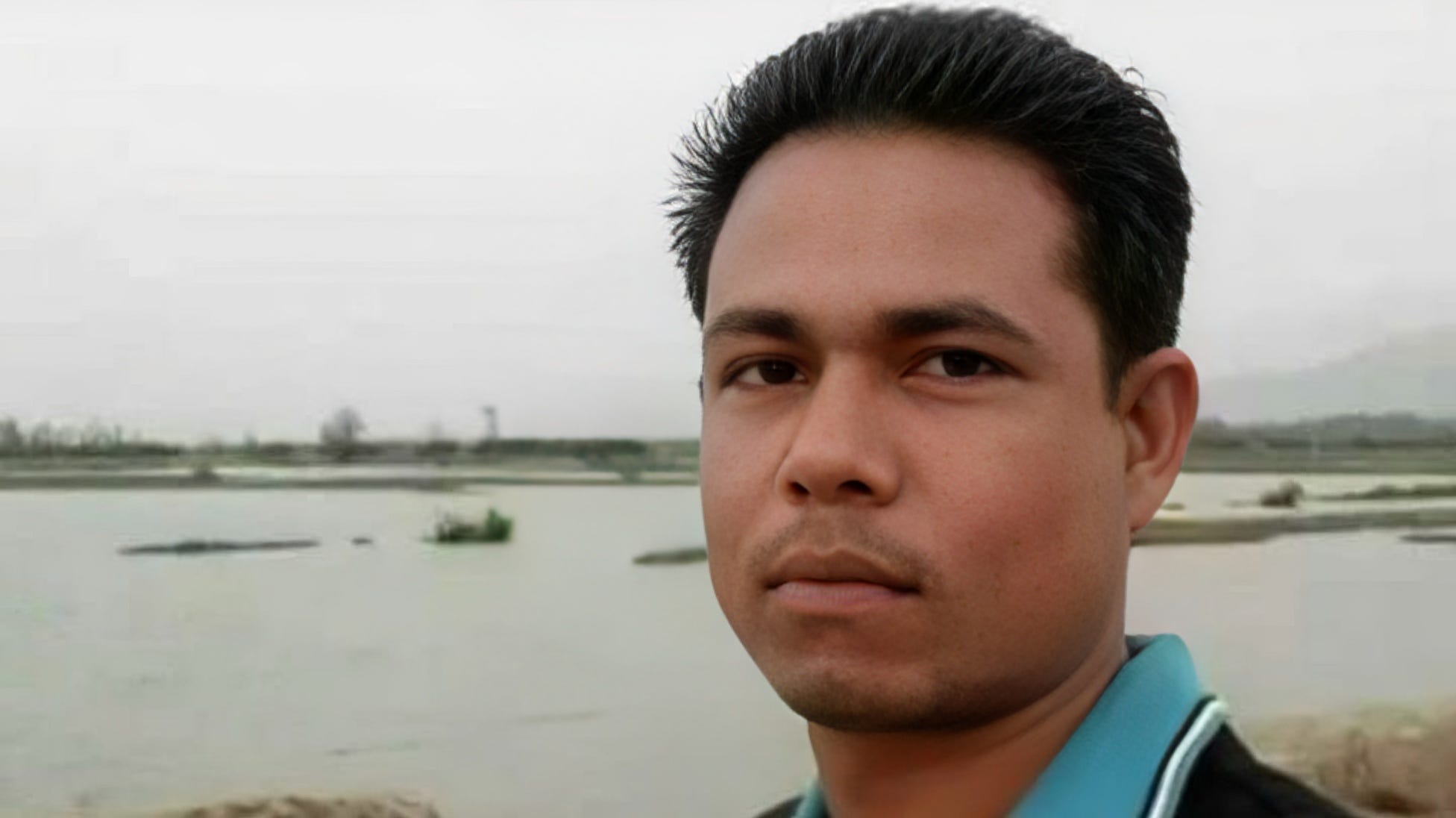
Kefayet Ullah, also known as Abdul Halim, an Arakan Rohingya Organisation (ARO) leader, was shot near Tarjar or Torjar Bridge between Camp 7 and Camp 8 East in Ukhiya on 5 May 2026. Two others, Mohammad Ullah and Nur Mohammad, were injured in the same attack. Police and APBn sources have said the attackers fled and that operations were launched to identify them. Some reports have attributed the killing to suspected Arakan Rohingya Salvation Army (ARSA) gunmen, while others have been more cautious, describing the attackers only as unidentified assailants.
But the killing should not be read simply as another episode of “refugee camp violence” or a routine contest for territorial control. The more important question is where Halim stood in the shifting order of armed groups, brokers, intelligence-linked intermediaries and refugee camp governance. In that sense, his killing appears to sit inside a longer history of Rohingya armed-group rivalry and, more importantly, inside the current struggle over who is permitted to exercise authority in the camps.
Halim had once worked within ARSA during the period when Abu Ammar Jununi was chief of the organisation. Abu Ammar, who led ARSA until his arrest, presided over a structure in which different operational areas in Arakan were reportedly divided between commanders. According to sources familiar with that background, Khalid, now the current chief of ARSA, operated in the north; Halim was associated with the middle zone; and Asaad with the south. The rivalry between Khalid and Halim, they say, began there, long before Halim’s death in Bangladesh. Khalid is alleged to have bullied Halim repeatedly and to have tried to eliminate him. In 2023, Halim was also reportedly shot by one of Khalid’s main men, Samudin, who is now in prison.
That history is important because it gives the killing a deeper political context. Halim was not merely a local refugee camp figure who suddenly became a target. He had a history inside ARSA, a history of conflict with its present leadership, and a later trajectory that placed him outside ARSA’s control. After coming to Bangladesh to lead camp operations in 2021, Halim was arrested by RAB. During his imprisonment, he reportedly complained about Khalid’s conduct in Arakan, but Abu Ammar did not act against Khalid. After Halim’s release in 2022, Abu Ammar called him back, but Khalid allegedly continued the same behaviour. Halim did not return to ARSA. He later joined the Arakan Rohingya Army (ARA), before eventually splitting away from Nobi Huson’s ARA to lead the Arakan Rohingya Organisation (ARO). (Confusingly, ARO was also once the political wing of the ARA).
This background helps explain why Halim’s killing cannot be reduced to a simple dispute between rival armed groups. The more politically sensitive claim from sources is that Halim was targeted because he did not fit the emerging expectations of refugee camp governance. In particular, Halim “did not accept Dil Mohammed.” That detail is important.
Dil Mohammed is not just another refugee camp name. I have reported on him at length. In brief, he is a controversial smuggler, broker and emerging power figure whose role has shifted from cross-border networks and military contacts to recruitment, armed mobilisation and public leadership theatre. In the camps, such figures matter because authority is not exercised only through formal institutions. It is also exercised through intermediaries, armed factions, intelligence-linked relationships, broker networks and carefully staged claims to community leadership.
In that context, Halim’s refusal to accept Dil Mohammed may have placed him outside the refugee camp order that is being assembled around armed groups, compliant intermediaries and intelligence-linked influence. This is the core issue. Halim may not have been killed simply because he was an ARO commander, or because of an old ARSA feud, or because of narcotics and extortion allegations. He may have become a problem because he refused to recognise the authority of a particular emerging arrangement inside the camps.
Sources also allege that the killing was preceded by an information campaign. According to these sources, DGFI and ARSA recently held a meeting, after which allegations were circulated through ARSA-linked pages and local news outlets accusing Halim of yaba dealing, kidnapping and extorting shops. That claim is significant because it challenges another version of events now circulating in the camps - that Halim was killed by drug lords or angry locals because of his violence, narcotics links and abuses against refugees.
The sources’ point is not that Halim was an innocent figure, or that allegations of violence, extortion or criminal activity should be dismissed. The more important claim is that these allegations may have been politically useful at a particular moment. It was amplified in a way that isolated and discredited him, and made his killing easier to explain afterwards - as if either inevitable or deserved.
The most serious allegation, then, is that DGFI used ARSA to kill Halim. That allegation cannot be independently verified and should be treated with caution. There is not enough evidence to conclude that DGFI ordered, planned or directed the killing. But the allegation itself is important because it reflects how many Rohingya now understand power in the camps - not as a simple conflict between armed groups, but as a murkier system in which armed factions, intelligence actors, brokers and camp-based leadership projects overlap.
Seen this way, Halim’s killing may have involved several layers at once, as mentioned above. There was the old rivalry with Khalid, now the chief of ARSA. There was Halim’s break from ARSA and later association with ARA and ARO. There was the contest for dominance in the camps. But there was also, according to sources, Halim’s refusal to accept Dil Mohammed and the wider camp order being built around him.
Halim’s killing, therefore, raises a larger question than who fired the shots near Tarjar Bridge. It raises the question of who is allowed to command or to mobilise, and who must submit to the informal architecture of refugee camp power. In that sense, the killing is not only about one armed commander’s death. It is about the violent policing of political obedience inside the refugee camps.
Join my WhatsApp Channel for news, documents, videos and images.
True news