

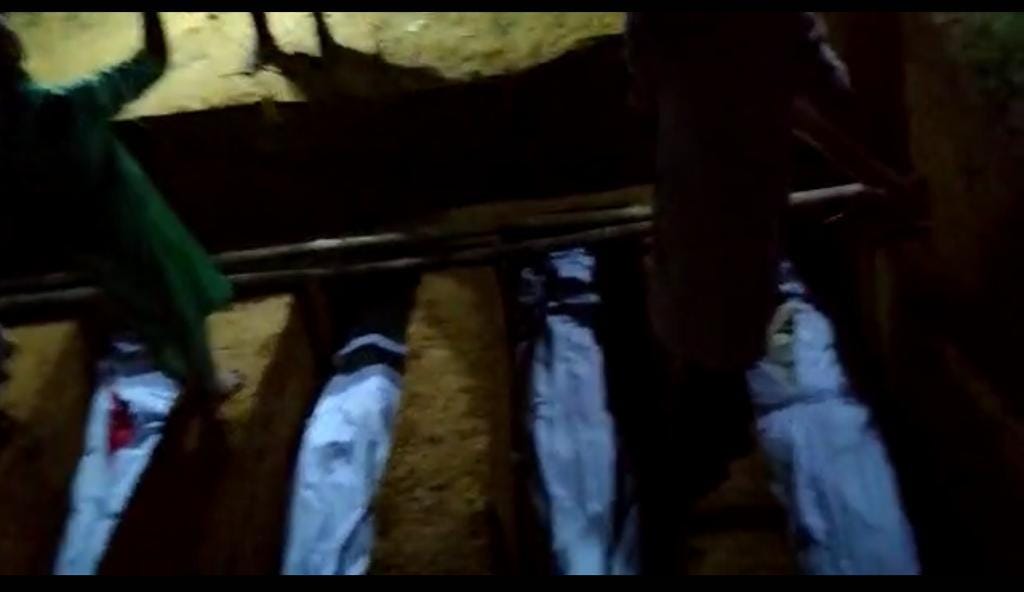
There are places that survive only as memory and ash. No Man’s Land or Zero Point is one such place. On 18 January 2023, a small Rohingya settlement at the Tombru border - a thin strip of shelter wedged between two states - was attacked and burned. People were killed, families scattered, and whatever fragile order existed there was erased in a day.
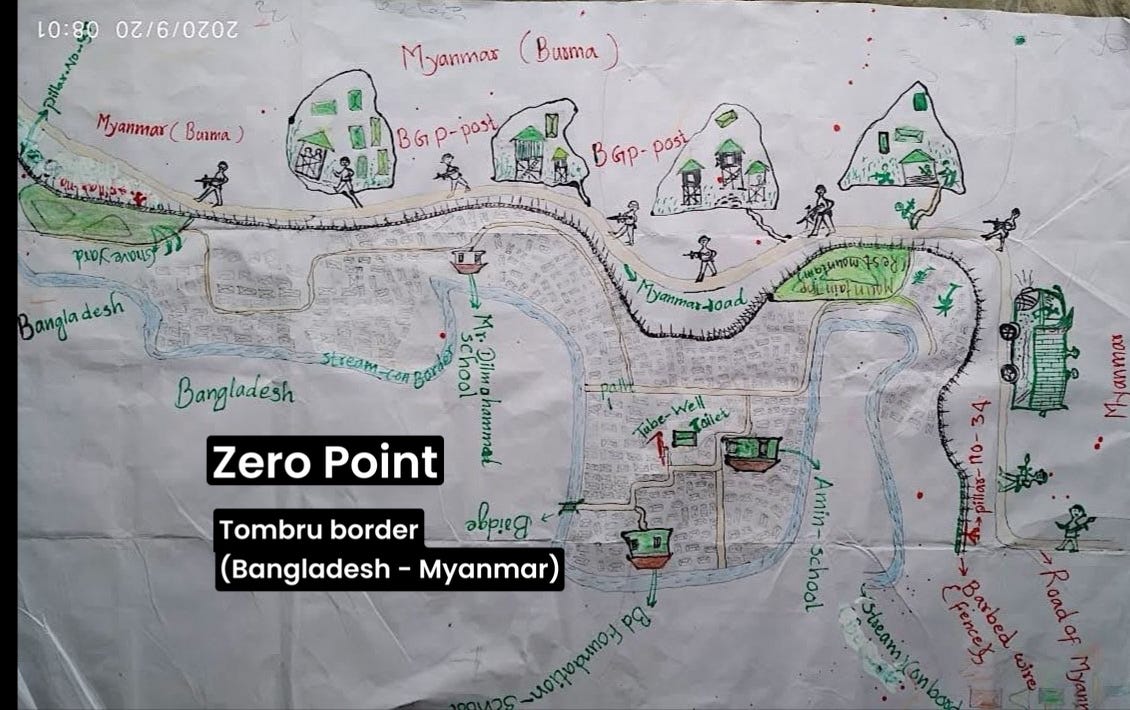
Rohingya refugees and witnesses said the settlement was attacked by Rohingya Solidarity Organisation (RSO) fighters, and alleged that Bangladeshi forces aided or stood aside as it was cleared and burned - claims I reported in detail at the time: Myanmar Bangladesh joint offensive cracks down on Rohingya. Fortify Rights later reported that Bangladesh authorities, together with RSO, entered “No Man’s Land.”
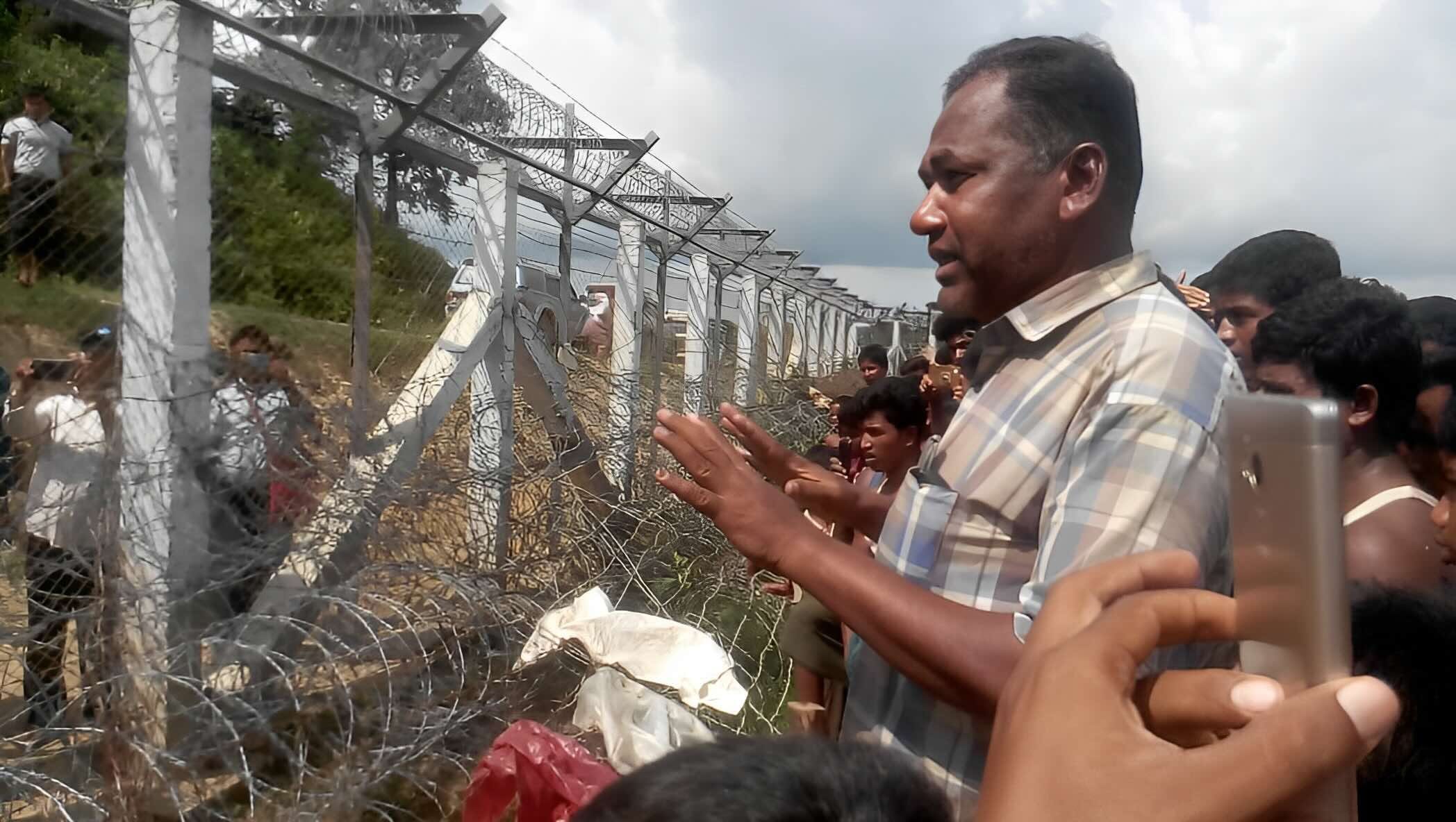
On 19 January, the community’s spokesman, Dil Mohammed, was abducted. Three years later, the settlement has not returned, and Dil Mohammed is still in prison. This is despite a UN Working Group on Arbitrary Detention opinion (adopted 25 August 2025, published 21 November 2025) finding his detention arbitrary and calling on Bangladesh to release him, provide reparations, investigate the violations, and report back within six months.
Bangladesh has not complied.
WGAD opinion did not ask for quiet consideration behind closed doors; it called for remedy, including that the decision be disseminated as widely as possible. Yet two months after the UN ruling was published, the government has offered no public response, and there has been no visible effort to publicise the finding. Even the family’s own press statement has not been published by any outlet.
The family’s statement is spare, factual and unsettling. It says Dil Mohammed was forcibly disappeared, held for a long period in an unknown location, and denied contact with family and lawyers. It describes what those months did to them: “uncertainty, fear, and deep mental anguish”, especially during the four months when they did not know where he was, or whether he was alive.
It also records the slow violence of the years since. After No Man’s Land was destroyed, the family scattered across different camps. Their mother has been able to see him only four times. More recently, Dil Mohammed was transferred from Bandarban prison to Cumilla, where the family has been told conditions are harsher. They say he was kept in shackles inside the prison. Each time they see him, they write that he looks weaker, greyer and changed by prolonged detention.
The family make one point with particular clarity. They say that this is not a political argument about allegations or affiliations. It is about what was done to their father - disappearance, denial of due process, and unlawful detention. They also restate what the UN has instructed Bangladesh to do now. Release him, provide reparations, investigate the violations, disseminate the opinion and report back within six months.
The family are not alone in calling for action. United Against Inhumanity (UAI) has issued a public statement urging Bangladesh’s donor partners to endorse the WGAD findings and press for compliance. UAI argues that Dil Mohammed’s treatment is not an isolated case but part of a wider pattern of criminalisation and coercion against Rohingya refugees, with a “chilling effect” on speech and association across the camps.
UAI’s statement also expresses specific concerns about his conditions of detention - including prolonged solitary confinement, coercive interrogations, and denial of access to family and legal counsel.
Dil Mohammed’s international counsel has also put the point plainly. In a statement from 33 Bedford Row Chambers, his lawyer, Haydee Dijkstal, notes that the UN Working Group on Arbitrary Detention found his detention since January 2023 to be arbitrary under international law and recommended his immediate release. The statement records that the case raised enforced disappearance, grave due process violations, and allegations of abusive detention conditions, including being held in a location “akin to a blacksite” and in prolonged solitary confinement, as well as threats to his and his family’s safety.
Three years on, “No Man’s Land” exists only in recollection: a border camp turned to ash, a community scattered, a story that moved on for everyone except those who lived it. Dil Mohammed’s continued imprisonment is part of that same aftermath. It is the second act of the same violence, carried out more quietly and stretched over years.
Ultimately, this is a simple test of whether a state can make a person disappear, prosecute him into limbo, and then ignore an international finding without consequence.
The bare minimum now is not a “review” but a result. Dil Mohammed should walk free.
Further Reading:
Landmark UN ruling demands Bangladesh free detained Rohingya leader Dil Mohammed.
International Spotlight on Bangladesh as Rohingya Leader’s Case Heads to the UN
The Disappearance and Arbitrary Detention of Rohingya Refugee Leader Dil Mohammed
The Disappearance of Dil Mohammed: A Voice for the Rohingya Silenced
Join my WhatsApp Channel for news, documents, videos and images.