

Yesterday was 25 August, Rohingya Genocide Remembrance Day.
Remembrance, of course, matters, but remembrance can also become strangely comfortable or predictable. And I mean not in a good way.
The Rohingya story has somehow got frozen in August 2017. As such, everyone has a tidy role. The Myanmar military is the villain. The Rohingya are the victims. Bangladesh is the generous neighbour. The international community is there to express concern and dole out cash.
Except the Rohingya did not stop having a political life when they crossed the Naf River in August of 2017. And some of the things that have happened since then never get to see the light of day.
Just five days before this year’s remembrance day, Bangladesh’s army chief General Waker-Uz-Zaman was talking about the Rohingya at the National Defence College.
If you understand Bengali, then play this video. If not, I translate the relevant words below.
His words were:
“We have learned how the Rohingya issue is affecting us, from damaging the environment in that area to putting huge pressure on the economy. From drug trafficking and smuggling, many kinds of unlawful activities are taking place there.”
The exact wording is worth noticing. Waker-Uz-Zaman did not say every Rohingya is a criminal. But if you look at the overall package - Rohingya, environmental damage, economic pressure, drugs, smuggling, crime. One thing slides neatly into the next.
And then look at how some media translated the message for the public:
“the Rohingya are getting involved in various types of crimes. They are getting involved in drug smuggling. The environment is being destroyed because of them.”
A refugee population becomes an environmental, economic , narcotics, and general crime problem.
Two days later, the same sorts of arguments were trotted out by retired Brigadier General Hasan Md Shamsuddin. He published an article describing Bangladesh as having carried the “burden” of 1.3 million Rohingya and linking the crisis to pressure on the economy, environment, border security, social stability and governance.
The article acknowledges the Rohingya crisis, but its analytical centre of gravity is Bangladesh’s strategic interests, not Rohingya rights or political future.
According to the former general, Bangladesh should talk to the junta and to the AA. Bangladesh should coordinate with China, India, Malaysia and the United States. But nowhere does the author suggest that Rohingya themselves should be participants in negotiations about their return and the future of Rakhine. The people who would actually be sent back are totally absent from the proposed diplomatic schema he has worked out!
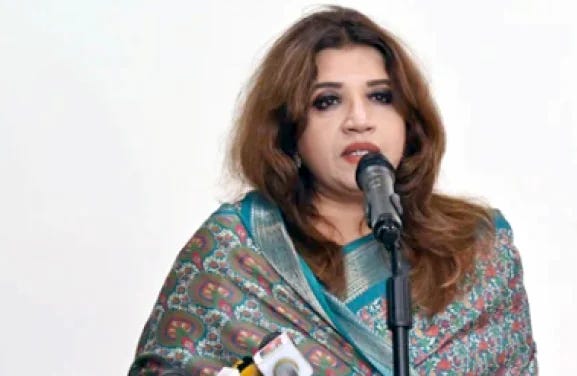
On 18 August, State Minister for Foreign Affairs Shama Obaed Islam contrasted the present situation with the supposed success of Rohingya repatriation under President Ziaur Rahman.
She said a tripartite agreement had been forged then, with the United Nations as “a very active party”, and that this was why the process proved effective.
There is a problem right there. That is not what UNHCR’s own contemporary record says.
Its report on 1978 states plainly that the repatriation agreement of 9 July was concluded between the governments of Bangladesh and Burma. It was not some neat tripartite success story.
And there is a much darker part of that history. A later UNHCR review records that the deliberate cutting of food in the 1978 Rohingya camps led to widespread loss of life. It cites ration-cutting as precisely the sort of coercive measure that destroys the voluntary character of repatriation. Read the horrendous history in this article here: The Doctor on the motorbike.
The 1990s were hardly a glorious model either. Bangladesh and Myanmar initially agreed another bilateral repatriation scheme without UNHCR involvement. Human Rights Watch later documented forced returns.
So this is not some pointless historical quibble. When coercive repatriation gets retold decades later as successful diplomacy by a BNP minister, history is being cleaned up. And once you clean up the past, it becomes much easier to sell the same basic policy again.
To the great and good, “Repatriation” has become a magic word. Again and again we are told that the solution is safe, voluntary and dignified repatriation. Lovely phrase. Who could possibly object?
The problem comes when repatriation stops being one possible solution and becomes the only politically acceptable future. At least, that is the rhetroic. Bangladesh wants repatriation while Myanmar wants repatriation on its own terms. Regional governments want Rohingya out. International agencies organise their work around the prospect of repatriation being just around the corner. As a result, meaningful intervention is not necessary because there is no need - given everyone is about to pack up and leave for Myanmar!
What needs remembering and highlighting.
Firstly, look at the people behind the fences. Rohingya are contained wherever they are - Bangladesh or elsewhere. And we have to call the situation in Bangladesh what it is: deliberate containment. More than a million Rohingya are systematically denied the right to move, work, study, or secure legal status. Humanitarian aid ensures basic survival, but politically, they remain warehoused.
Secondly, you cannot repatriate someone to an erased village. Hundreds of villages were burned in 2017. Afterwards, bulldozers flattened those sites. Roads, military installations and other structures were built on land where Rohingya homes had stood. Genocide isn’t just mass slaughter and forced expulsion. It is the deliberate re-engineering of the land to ensure return is physically impossible.
Just yesterday, OHCHR came out with a report. It makes for grim reading. Let me give you one bit of information the report contains. The Arakan Army is not simply blocking returns, but actively reshaping the demography and geography of northern Rakhine. OHCHR documents non-Rohingya settlements built directly on Rohingya land - including roughly 2,000 seized acres, eight new villages in Buthidaung, and the occupation of 11 emptied villages in Maungdaw. Rohingya have been coerced into dismantling their own homes. Village names are systematically wiped out. As the report warns, this engineering is calculated to destroy "any possibility of sustainable return.”
The focus on repatriation denies these realities. It is used as a coercive policy. Everyone has to accept as fact that this is the only solution. Never mind the complete absence of citizenship, safety or restitution. This is how Rohingya dispossession is being normalised.
Thirdly, the destruction of citizenship in Myanmar is oversimplified. And this has wide implications. The 1982 law was pivotal, but Rohingya were not suddenly converted into foreigners in one stroke once the law was passed. It was a helluva longer administrative process involving censuses, document confiscation, changing identity cards and progressively excluding Rohingya from recognised ethnic and political membership.
The violence of 2017 was not the beginning of the process; it was one culminating moment from decades in which the state had already been administratively separating the Rohingya from Myanmar society.
And here is the present-day implication of the above. Promising to scrap the 1982 Citizenship Law is not a solution - it is the bare minimum. You cannot undo decades of state crime by deleting a single statute. The entire apartheid edifice has to go.
In my book, that would require full recognition of Rohingya identity and citizenship free of discriminatory vetting/verification, political rights and restitution for confiscated property.
( I think it is well understood by all and sundry that the “verification process” to establish belonging is simply a game played over and over for the press to lap up. It is perverse to demand that people violently driven from their homeland must somehow prove all over again that they actually belong there.)
Fourth - there is the grotesque hypocrisy across the region. India, Malaysia, Indonesia, and Thailand have settled on a standard playbook. Demonise Rohingya, deter them on land and sea. Lock them up. Deport them, including pushing people back out to sea or back to Myanmar. Whatever the consequences. In Malaysia and India especially, venomous anti-Rohingya hate campaigns are actively stoked on social media. Yet every August 25th, ASEAN’s moral bankruptcy and the violent criminalisation of Rohingya survival are quietly swept aside.
Then there is Rohingya political agency. Rohingya appear almost entirely as victims acted upon by Myanmar, the Arakan Army, INGOs and foreign powers. There is little to read about Rohingya civil society, resistance, armed groups, co-opted/captured groups, demands for citizenship and accountability, or disagreements within the community (apart from here at Rohingya Refugee News - so please subscribe!)
The danger is that humanitarian language reinforces this passivity. WFP’s favourite phrase is that “Rohingya are 100 percent dependent on aid.” No, they are not. There are some outcomes of this kind of vocabulary. If Rohingya are constantly portrayed as vulnerable beneficiaries, then outsiders remain the decision-makers. Bangladesh decides where they live. UN agencies decide how assistance works. Myanmar decides who may return from data provided by Bangladesh (taken with or without consent). International actors decide what counts as a realistic solution.
Then there is the political failure of the post-coup resistance. The NUG has only offered vague citizenship commitments. It has treated Rohingya equality as an afterthought. And it has failed to make Rohingya equality foundational to the anti-junta struggle. Across the broader resistance movement, the strategy has been to postpone Rohingya rights until some imagined democratic future. In the last two years, and particularly with the rise of the Arakan Army, the vacillation shown by these so-called anti-junta forces has been disheartening for the Rohingya.
Finally, there is International law’s political selectivity.
Many Rohingya harbour no illusions. Even those Rohingya in the diaspora embedded in the NGO/INGO system will privately admit that international law has proved toothless. The legal filings at the ICC, ICJ and elsewhere make for impressive headlines, but that’s about it.
No one with a brain is fooled by states hiding behind these cases while washing their hands of real political action. Rohingya in the camps hear the endless rhetoric about accountability, but they look around only to see their daily confinement.
Right alongside "accountability" is the call to "end impunity.” This a phrase repeated so often in UN halls and elsewhere that it has lost all practical meaning. It just functions as a cheap moral posture.
The last thing to remember about Rohingya Genocide Remembrance is that donors and host authorities should not be allowed to claim the moral high ground through solemn August 25 statements - while maintaining a regime of containment. Commemorating genocide rings completely hollow when your policies deny the living a future.
Join my WhatsApp Channel for news, documents, videos and images.
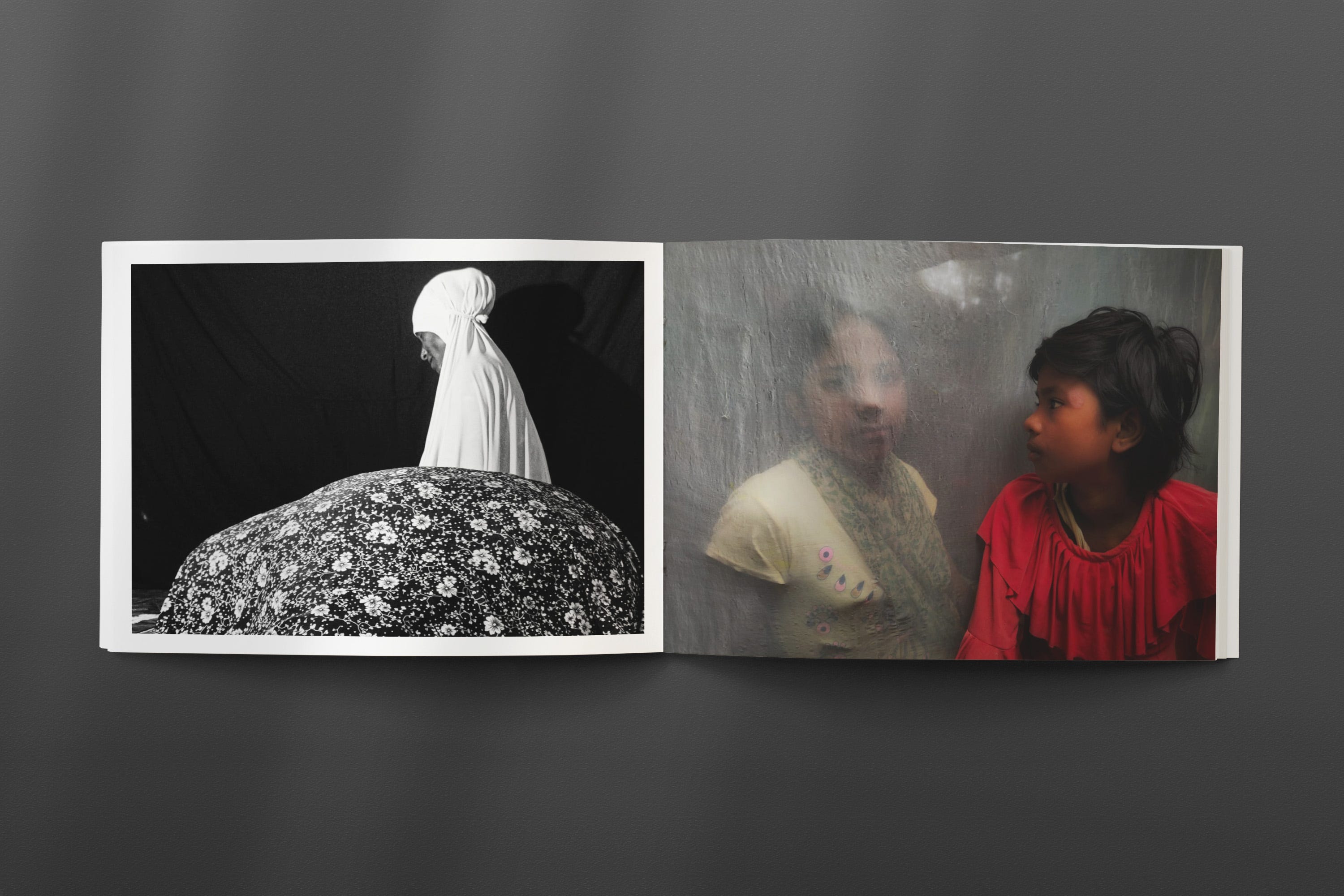
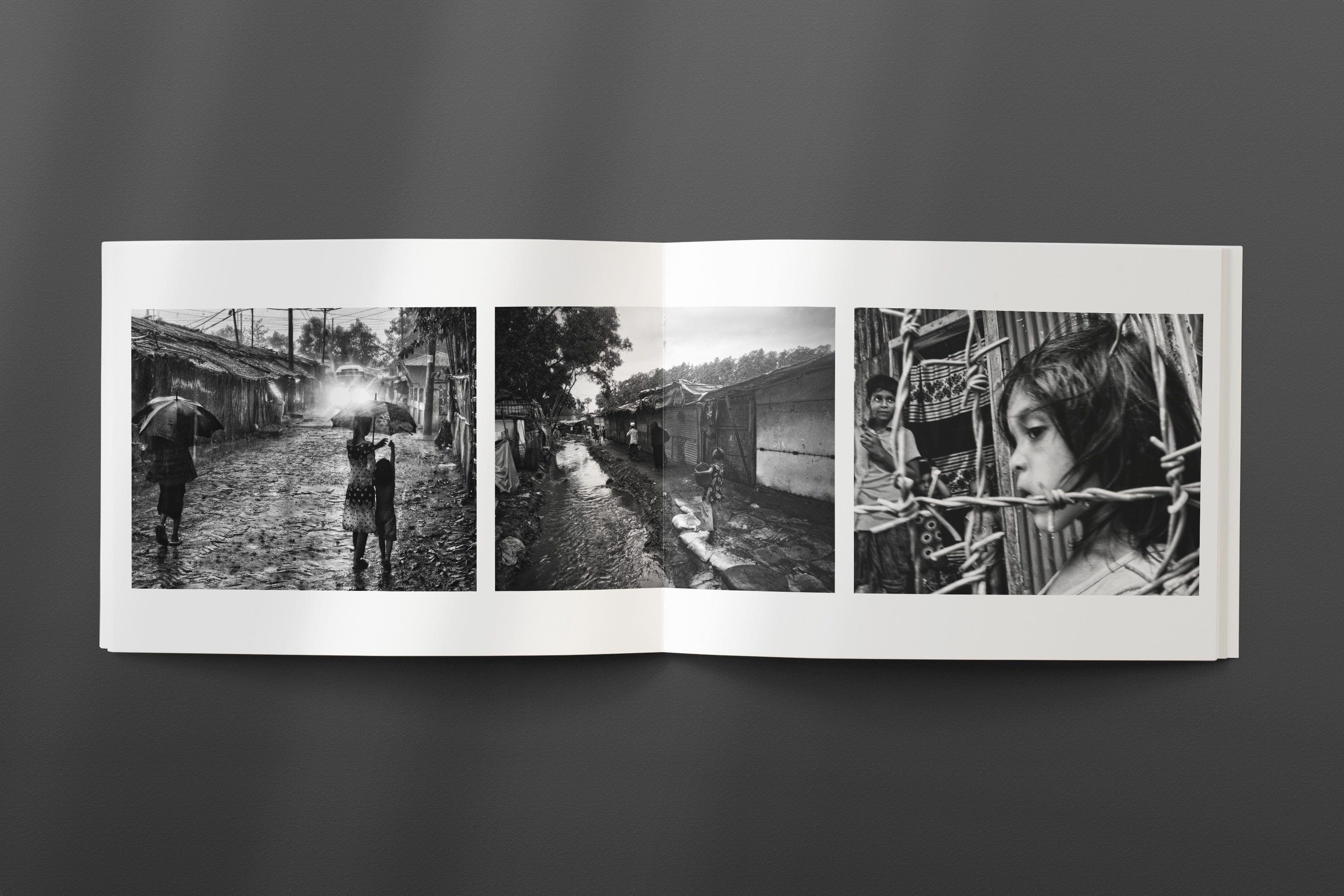

Finally, before you go. I am thinking about producing a book of photos taken by Rohingya photographers, along with some commentary from me. These Rohingya youths have produced stunning work. Much of it remains unseen.
I cannot see myself approaching publishers. Too time-consuming and I suspect very difficult. Therefore, the only way to do this quickly would be something self-published and funded directly through pre-orders. The design layout is pretty much done, thanks to my mate Catalin Dantis.
I have been thinking about this for too many years. So it is now or never. Would you back a project like this? Please vote in this poll below. It is anonymous and you are not committing to anything! It is just to give me an idea of whether it might work or not.
Very informative. I especially appreciate the point about the use of dependency as a means of control. This is so sad when so many Rohingya people would rather be able to work for an income and to build up their community than be dependent.
It should be said more. The Myanmar Reviews wrote about this a few days ago.