

From 1 April 2026, the World Food Programme will no longer provide equal monthly food assistance to Rohingya refugees in Cox’s Bazar and Bhasan Char.
Instead, households will be divided into three categories:
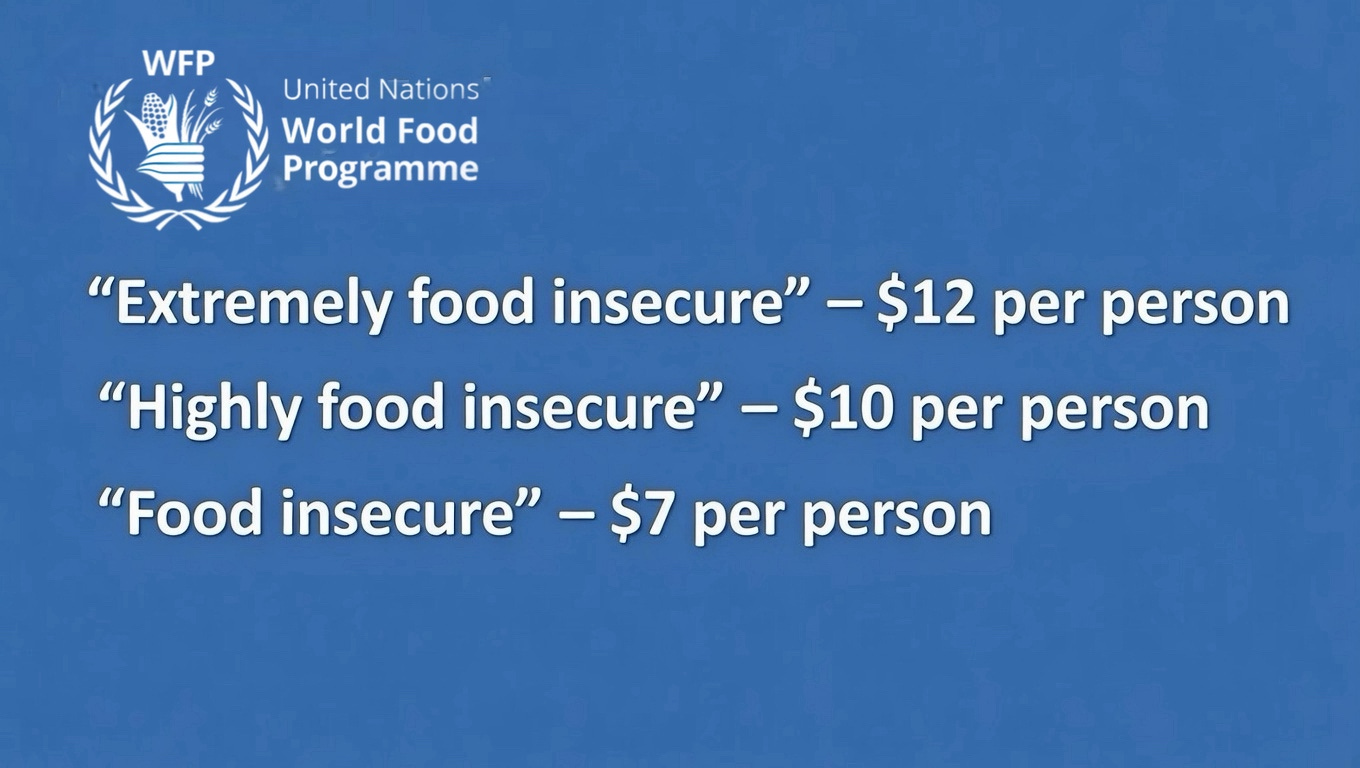
“Extremely food insecure” – $12 per person
“Highly food insecure” – $10 per person
“Food insecure” – $7 per person
The shift is described as a Targeting and Prioritisation Exercise (TPE). WFP says it is a way to ensure that “those who are more food insecure receive more assistance” so that everyone reaches a similar minimum level of food security.
That is the official line. But this move is not neutral. It is political. And it quietly undermines one of the central myths of the Rohingya response.
First, this is the explainer WFP has produced. It is not on their website as yet. However, refugees have been shown these documents.


The End of Blanket Assistance
For years, Rohingya refugees have been described as “100 per cent dependent on aid.” The phrase is repeated by UN agencies, celebrity ambassadors, and donor governments alike. You may remember reading this post I made:

Yet this new policy introduces differentiation. So think about it - if all Rohingya households were equally dependent, then there would be no basis for tiered rations. Everyone would require the same transfer.
Instead, WFP now recognises that:
Some households can cope better than others.
Some require less assistance to reach the minimum caloric threshold.
Some are considered less “vulnerable” because they contain able-bodied adult men.
In Group 3, the lowest ration category, are “male-headed households with able-bodied men and without members with disability.”
Pause on that. The assumption embedded here is unmistakable. Able-bodied labour capacity reduces vulnerability. But how, exactly, does labour capacity reduce vulnerability in camps where refugees are legally prohibited from working?
The answer is obvious to anyone who has spent time inside the fences.
Because people work anyway.
The Implicit Admission
This targeting exercise is not an admission of self-sufficiency. Rohingya refugees remain structurally blocked from formal employment.
But it is an implicit acknowledgement of economic differentiation inside the camps. Households cope through informal day labour, small trading, remittances, “volunteer” stipends, market resale of food and risky external work.
In other words, survival is already partially market-mediated.
The long-standing narrative of uniform dependency was always a simplification - useful for fundraising, useful for moral clarity, and useful for donor messaging.
This policy quietly concedes what field reality has long shown: some households are drowning, others are treading water.
And now WFP is pricing the difference.
This Is Not Unique to the Rohingya
Those who follow humanitarian policy will recognise this move immediately. Vulnerability-based targeting is standard WFP practice in protracted crises. It has been rolled out in Lebanon and Jordan for Syrian refugees, Kenya’s Dadaab and Kakuma camps, Uganda, Yemen, South Sudan and Ethiopia.
The pattern is familiar. As funding declines, blanket assistance becomes fiscally unsustainable. Agencies respond by introducing vulnerability scoring systems, and recalibrating transfers according to assessed levels of need. The language is one of efficiency and better targeting. In practice, however, it is rationing: reducing assistance for those deemed “lower risk” in order to stretch shrinking budgets. The Rohingya response has simply reached the stage where universal provision can no longer be afforded.
The Logic of Triage not Protection
WFP insists this approach ensures “no one is left behind.” But targeting always creates tiers of protection. Some families will receive $12 per person. Others will receive $7.
In a context where refugees are legally barred from formal work, mobility, and land access, that difference is not trivial.
The irony is sharp. I repeat, for years, the Rohingya have been described as wholly dependent. Now they are being divided into degrees of dependency.
The Warning Not to Sell Food and the Policing of Survival
“We encourage you to make full use of all the food you receive, as it is specifically calculated to meet essential food needs. Avoid selling any part of the food assistance you receive.”
One small line in the notice stands out:
“Avoid selling any part of the food assistance you receive.”
Why include that? Because food resale exists. And food resale only exists where markets exist. And markets only exist where economic activity exists. Which means that even in the most controlled humanitarian environment in the world, informal economies pulse beneath the narrative of dependency.
The targeting notice includes a familiar line - beneficiaries are encouraged not to sell any part of their food assistance.
But in practice, WFP now does more than encourage.
In certain distribution points in Teknaf, cooking oil bottles are partially opened before being handed to refugees. WFP’s spokepserson, Kun Li, confirmed this in writing to me, describing it as an “exceptional measure” introduced to reduce the risk of resale after WFP-branded oil appeared in local markets.
Read that again.
Food assistance is opened at the point of distribution to prevent resale. This is framed as safeguarding integrity. It is also an unmistakable signal of distrust. Many refugees describe it as humiliating and punitive, treating an entire population as suspect at the very moment they receive basic assistance.
Resale does not occur in a vacuum. It happens because food rations do not cover the full cost of life in the camps. Families need cash for medicine, fuel, phone data, transport, debt, and countless other expenses that humanitarian food baskets do not address. Converting oil into cash is not misuse; it is adaptation.
Yet the system responds by tamper-proofing survival. The same structure that prohibits formal work, restricts mobility, and limits income now intervenes at the moment of food distribution to prevent households from converting aid into liquidity.
Dependency is permitted. Flexibility is not. Watch the video:
Video from a Teknaf distribution point showing a WFP store assistant removing the WFP label and opening the seal of a cooking oil bottle before handing it to a Rohingya refugee household. WFP confirmed that seal-opening is an “exceptional measure” introduced to reduce resale of humanitarian assistance.
What This Really Signals
This shift does not mean empowerment. It does not mean integration. It does not mean rights. It means being measured against a labour capacity you are legally forbidden to use. And it means the Rohingya response has entered the long phase of managed austerity.
Donor funding fell sharply in 2023 and is projected to decline further. Protracted crises become normalised. Rations shrink. Targeting replaces universalism. The humanitarian system adapts. But it does not transform. The more uncomfortable question remains untouched. That is, why nine years after the 2017 exodus are Rohingya refugees still legally prohibited from formal work while simultaneously being assessed on their labour capacity?
Dependency is first manufactured through restriction. Then it is tiered through targeting. And finally, it is budgeted. This is the quiet recalibration of survival.
Join my WhatsApp Channel for news, documents, videos and images.