

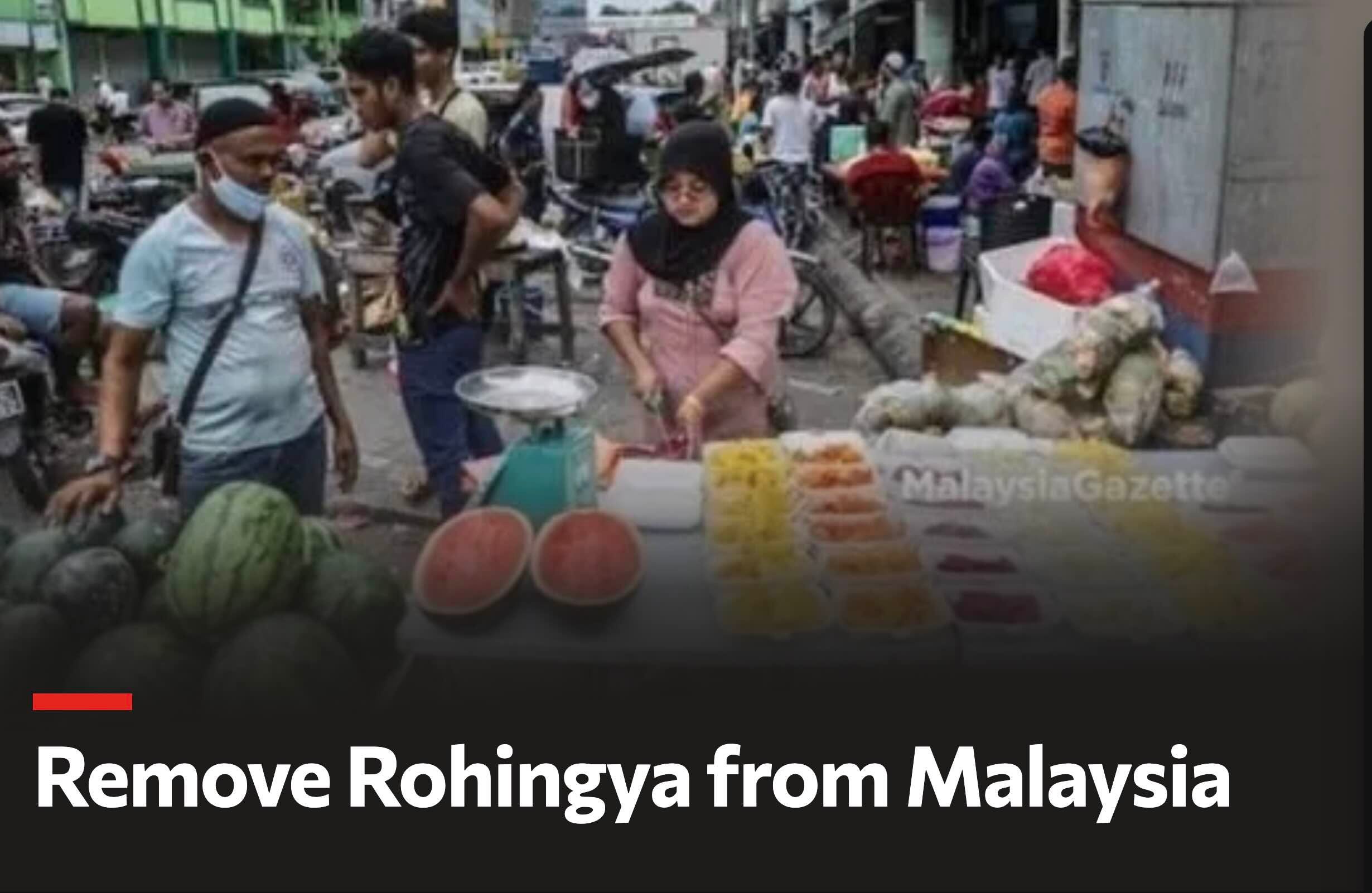
An online petition calling for the “removal” of Rohingya refugees from Malaysia has rapidly gathered (at the time of writing) over 130,000 signatures in four days. Addressed directly to Prime Minister Anwar Ibrahim, its title is stark and uncompromising - “Remove Rohingya from Malaysia.”
On its surface, the text does not scream. It avoids crude slurs, bypasses explicit incitement to violence, and even pauses to claim that it understands the “humanitarian aspect” of the crisis. But that clinical calm is precisely what makes it dangerous. This is not the raw, unpolished hate speech of internet trolls; it is racism dressed up as administrative common sense. It presents mass expulsion not as a human rights violation, but as prudent public policy and national self-care.
The title of the petition is the only loud bit. Everything that follows is a sanitising operation designed to whitewash a draconian demand into the respectable vocabulary of governance.
The Petition’s Four-Part Argument
The petition builds its case through four familiar approaches. First, it turns Rohingya refugees into a resource burden. They are not presented as people fleeing persecution, but as pressure on infrastructure, social services, healthcare and public budgets. The text avoids saying, “We do not want them here.” Instead, it says, “The system cannot cope.” The result is the same, but the language sounds more respectable.
Second, it turns scarcity into competition. Malaysians are invited to see refugees as people taking something away from them - jobs, services, space, aid or security. This redirects public anger away from deeper structural problems such as inequality, weak services, inflation and labour exploitation, and attaches it to a displaced population with no power.
Third, it creates security anxiety without evidence. The petition refers vaguely to “reports of crime rates increasing” in areas where refugees live. It does not have to prove collective criminality. It only has to create an association between the Rohingya and crime. The caveat, “while not all refugees are involved”, sounds reasonable, but it actually deepens the insinuation. It says, in effect, we are not blaming all of them, but you know what we mean.
Fourth, it hides removal behind humanitarian language. Terms such as “alternative solutions”, “third countries”, “home regions in Myanmar” and “humane solution” make expulsion sound like a technical policy option. The demand is removal. The vocabulary is management. This is the petition’s central laundering move - it turns a call to get rid of a persecuted minority into the language of orderly governance.
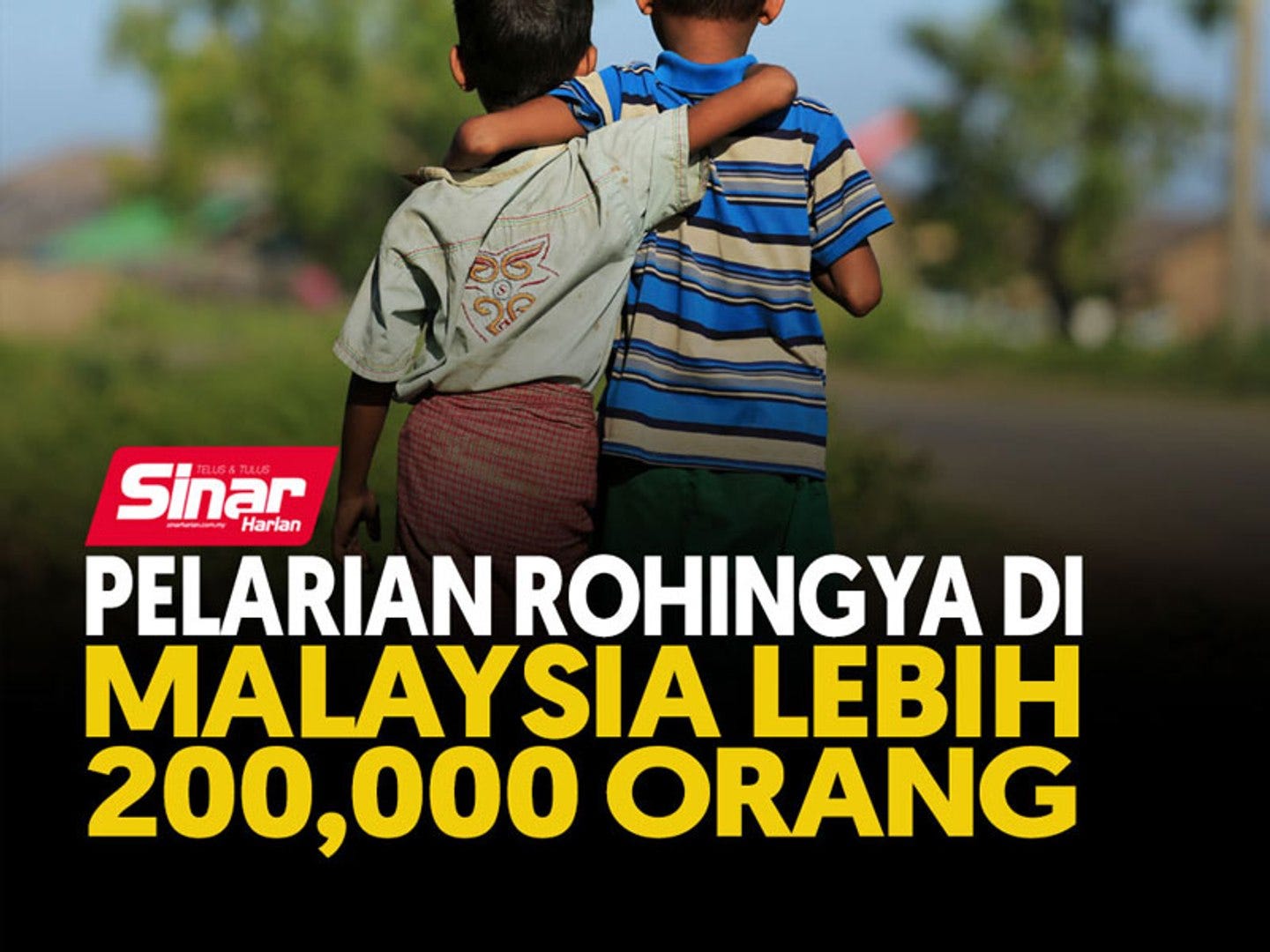
This rhetoric is highly effective because it operates within a deliberate legal vacuum. Malaysia possesses no domestic legal framework for refugee protection and has not signed the 1951 Refugee Convention. While UNHCR records show that as of early 2026 there were roughly 215,600 refugees and asylum-seekers registered in the country - including over 126,000 Rohingya - these numbers carry no weight under domestic law. Instead, refugees are legally flattened into the criminalised category of PATI (Pendatang Asing Tanpa Izin - undocumented migrants).
When a petition demands “removal” in this environment, it is not a neutral policy suggestion. It is a direct green light to the existing machinery of the state. It speaks to a public culture where refugees are already subject to immigration raids, indefinite detention, and systemic labour exploitation. Once an entire population is codified solely as illegal foreigners, every subsequent cruelty can be branded as mere law enforcement.
The History of “Humane” Deportation
The petition’s rhetoric may appear contemporary, but its architecture is old. More than two decades ago, Human Rights Watch documented how Malaysia’s immigration system treated Rohingya not as refugees but as “illegal immigrants”, exposing them to detention, deportation and abuse. The report also quoted Malaysian public discourse that described undocumented migrants as competitors for jobs, sources of crime, threats to security and a financial burden on the state. The current petition merely updates that older grammar. It turns Rohingya into a resource burden, converts scarcity into competition, invokes crime without evidence, and then presents removal as administrative necessity.
Wang Kelian should haunt any Malaysian discussion of “removal” - the 2015 mass graves on the Malaysia–Thailand border exposed what can happen when refugees and migrants are pushed into systems of trafficking, extortion and official neglect.
In 2020, during an earlier wave of anti-Rohingya xenophobia, the Centre for Human Rights Research and Advocacy (CENTHRA) issued a statement that seemed, at first glance, to speak in the language of human rights and Islamic compassion. This was not some fringe anti-migrant outfit. CENTHRA was known in Rohingya circles and regarded as a sympathetic, respected human rights organisation. Which is precisely what made the line buried inside its statement so revealing:
“Deportations, if necessary, must be done in a respectable, humane manner.”
That phrase exposes the fundamental contradiction of respectable xenophobia. When even a group seen as friendly to the Rohingya can imagine deportation as something that merely needs better manners, the problem is not just open hatred. It is the respectable humanitarian vocabulary through which removal becomes thinkable. What exactly is a “respectable” and “humane” deportation when applied to survivors of a genocidal campaign?
By 2021, Malaysia deported Myanmar nationals despite a court stay order, drawing international criticism for violating the principle of non-refoulement, which bars returns to danger. In 2022, Human Rights Watch said Malaysia had accelerated summary deportations to Myanmar without assessing asylum claims, including for Rohingya and other Myanmar nationals.
For the Rohingya, deportation does not mean an orderly bureaucratic transfer through an international airport terminal. It means refoulement - forcible return to a military junta in Myanmar that stripped them of citizenship, torched their villages, and slaughtered their families. In this region, it has historically meant something even cruder. It means pushing starving families back into the open sea to drift, drown, or disappear. There is no humane way to enact persecution. There is no respectable way to tow a boat of desperate people back into open water.
Making Removal Respectable
The petition’s ultimate utility is that it offers its signatories a moral insurance policy. It tells them they can retain sympathy for the Rohingya in the abstract while demanding that they disappear from local streets, schools and workplaces. It suggests that protection amounts to a form of theft from citizens. It recasts refugee survival as a threat to national welfare. It is the slow, deliberate cultivation of a public common sense that renders a vulnerable minority socially deportable long before they are ever actually expelled.
When the mainstream so easily absorbs the logic of exclusion, the distance between administrative language and structural violence vanishes entirely. Once a population is made socially deportable, the line between policy and violence disappears. What begins as “order” becomes permission - permission to detain, remove, and abandon people whose only crime is that they are unwanted.
Further Reading:
The Anti-Rohingya Turn in Malaysia’s Online Spaces

Content warning: This post contains racist and anti-refugee language (quoted for documentation), and references to incitement and violence.

Revisiting Malaysia’s “Respectable Deportations” of the Rohingya

Reading recent Malaysian coverage of the Langkawi boat tragedy, I keep find…
Join my WhatsApp Channel for news, documents, videos and images.
https://terresottovento.altervista.org/una-petizione-online-per-rimuovere-i-rohingya-in-malesia/ here it is my translation into italian.