

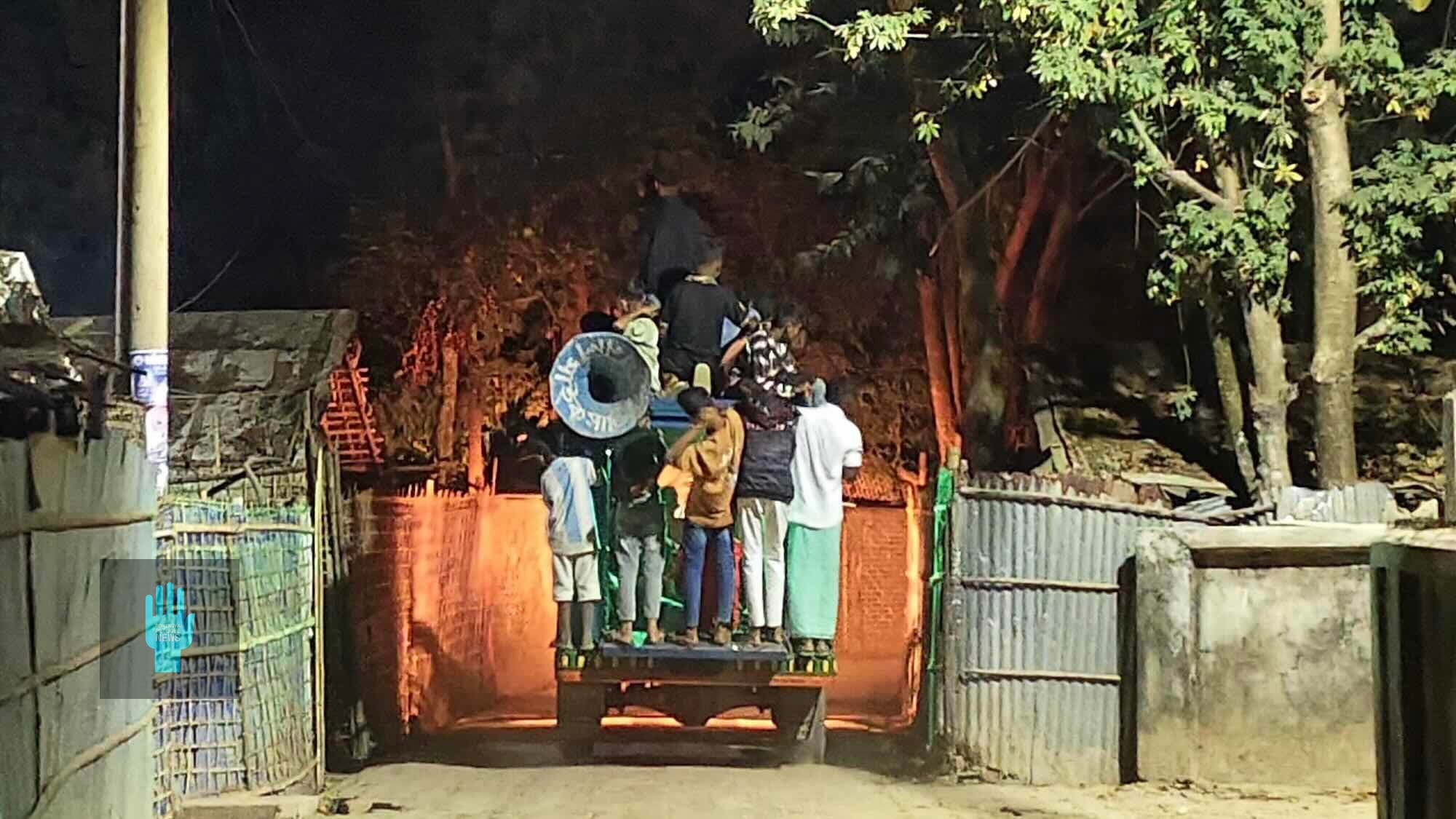
On the night of 5 February, several people, including children, were shot in Ali Khali Camp 25 by individuals travelling on a BNP campaign truck that had entered the camp for election “miking.”
The Rohingya were supposed to be silent. Sealed in. Invisible. That is what the Election Commissioner demanded. Ahead of Bangladesh’s 13th national election, the state did not merely prepare polling stations. It prepared a lockdown of human beings.
The order was clear. No Rohingya could leave their camps. Checkpoints were to be tightened. Motorbikes and autorickshaws are banned. Markets closed. Social media and meetings shut down. Imams and majhis were to “educate” refugees not to get involved in politics. NGOs were to stay away. Mobile courts were to dispense summary sentencing. Joint forces were to patrol. And all political parties were told, solemnly, not to use Rohingya in campaigns. You can read the list here.
The justification? Risk. Crime. Security. Sabotage of the elections.
Election Commissioner Abul Fazal Mohammad Sanaullah said the camps must be “sealed.” He spoke as if the bamboo shelters of Ukhiya and Teknaf were militant holdouts, not crowded sites of hunger, trauma, and dependency.
This is the Bangladesh playbook: when democracy feels shaky, find a powerless enemy and lock them down.
Then reality intervened.
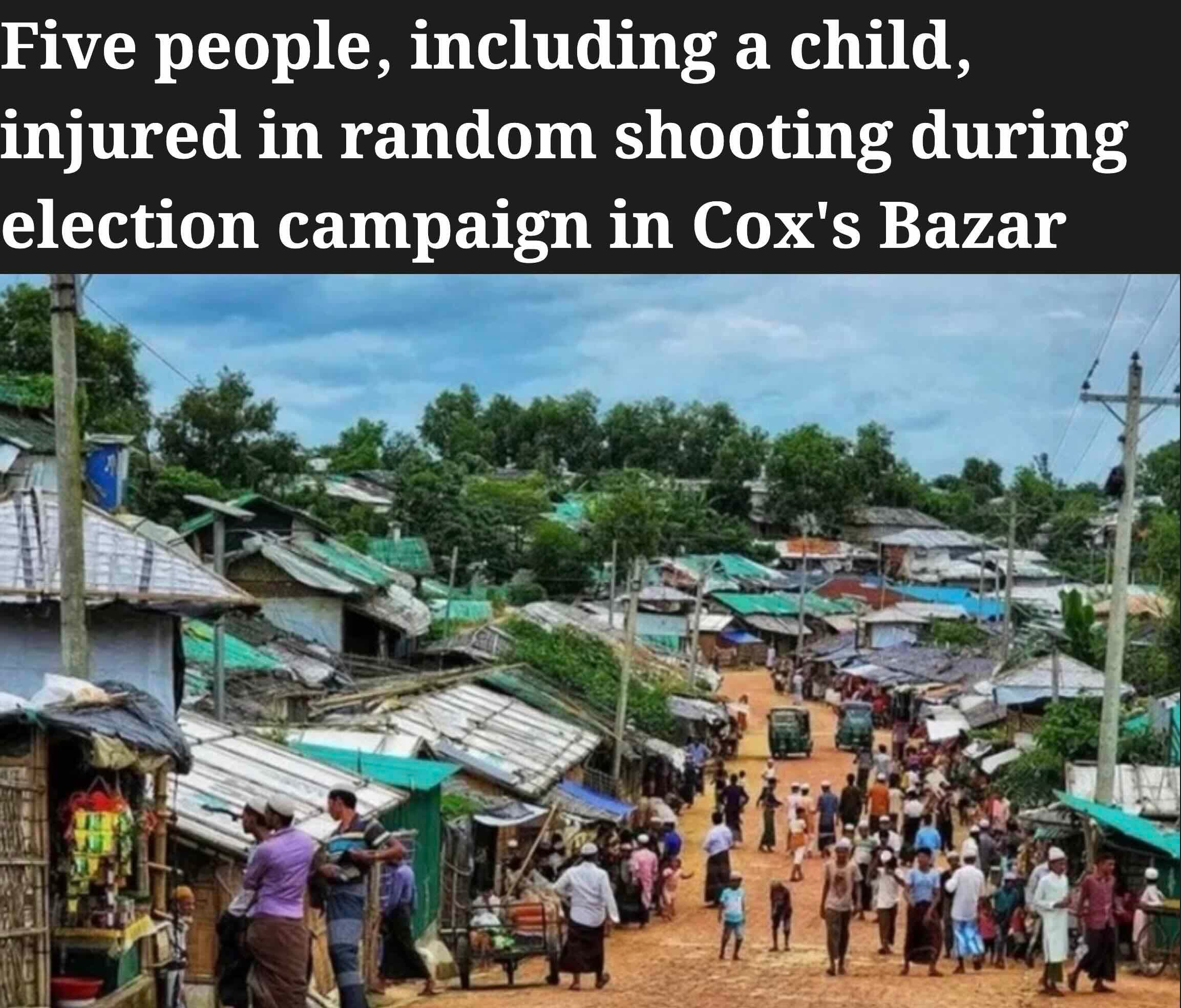
What actually happened in Ali Khali
On the night of 5 February, in Ali Khali camp 25, violence did not come from Rohingya. It came to them. A BNP campaign truck, blasting music, carrying people reportedly dancing and drinking alcohol, rolled into the camp to do election “miking.” Crowds gathered, as they always do when something unusual enters a place of enforced monotony.
Then shots were fired. Not by Rohingya. Not by “criminal networks in the camp.” Not by some mysterious outside infiltrator.
According to a camp-based report, the bullets came from people travelling in the election vehicle itself.
Five people were shot. Among them were:
Host community children
A Rohingya boy
A Rohingya adult man
All are now in hospital.
While the state was busy banning Rohingya movement, banning Rohingya gatherings, banning Rohingya transport, and effectively placing them under collective punishment in the name of “electoral security,” armed campaigners were driving into the camp, drinking, blaring music, and firing weapons at people standing outside their own shelters.
The double standard laid bare
If Rohingya had fired those shots, we already know what the headlines would say.
“Rohingya criminals disrupt election.”
“Armed refugees threaten democracy.”
But because the accused are linked to a mainstream political campaign, we are told instead: “We don’t yet know who fired.” It was “random.” The Teknaf Model Police OC said: “Who fired the shots will be known later.” The 16 APBn commander said that “miscreants suddenly fired on the crowd” but added that it is not known who they were. The language becomes soft. The state becomes cautious. The narrative shifts.
So much for “protecting” the election. So much for sealing camps to prevent violence. The truth is simple. Rohingya were treated as a threat in advance, without evidence. Non-Rohingya campaigners were treated with leniency after real gun violence.
What this really shows
The Ali Khali shooting exposes the lie at the heart of the restrictions. The problem was always political impunity, armed campaigning, and a culture where violence travels with power.
By sealing camps, the state did not make elections safer. It simply made refugees more trapped and more vulnerable. They were told to stay inside for “their safety.” Then bullets came from outside. They were told not to gather. Then they were shot for gathering out of curiosity.
Bangladesh does not need to seal refugee camps to protect its elections. It needs to stop tolerating armed political muscle, stop weaponised campaigning, and stop scapegoating people who have no vote, no rights, and no voice.
Sealing Rohingya camps does not fix ballot rigging. It does not stop campaign violence. It does not create fair elections. It only deepens injustice.
The Ali Khali incident is a window into how power works. Free movement for those with political backing, collective punishment for those without it.
That is the scandal.
Related Reading:
Why Is Bangladesh Sealing Rohingya Camps for the 2026 Elections?

On February 12, 2026, Bangladesh will go to the polls for the 13th national …
Join my WhatsApp Channel for news, documents, videos and images.