

The racist Change.org petition demanding the “removal” of Rohingya refugees from Malaysia is now under review.
But the anti-Rohingya campaign has not disappeared with the suspension of one petition page. It is mutating. It has moved from petition language to social media vigilantism, from “resources” and “security” to crude attempts to identify, isolate and mark out Rohingya bodies in public space.
The latest example is a poster circulating on Malaysian social media asking:
“How do you distinguish a Rohingya person from a Bangladeshi?”
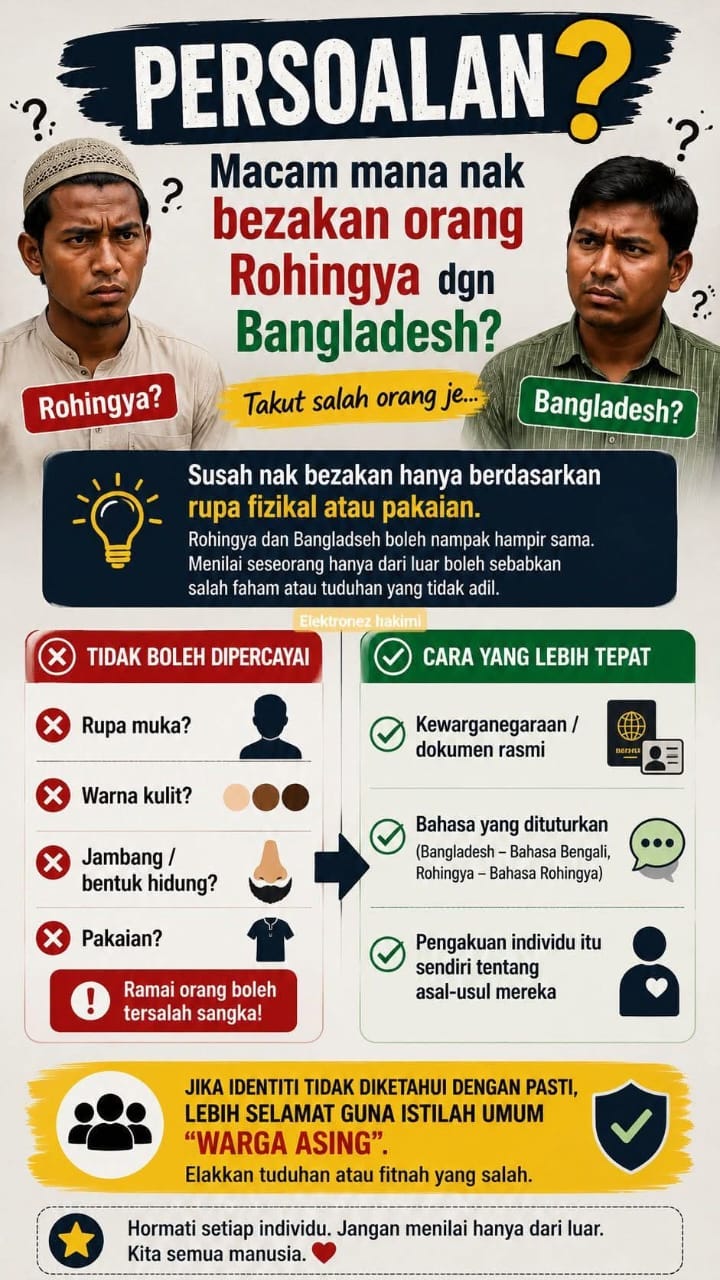
On the surface, the poster tells people not to rely on face, skin colour, beard, nose shape or clothing. It says Rohingya and Bangladeshis may look similar. It advises people to look instead at documents, language, or a person’s own explanation of their origin. It ends with the soft line: “Respect every individual. Do not judge only from the outside. We are all human.”
That final sentence is supposed to make the whole thing sound humane. It does not. Because the question itself is already rotten.
Why are Malaysians suddenly circulating graphics about how to distinguish Rohingya from Bangladeshis? Why has this become a public concern? Why are people being sorted like this at all?
The answer is obvious. The anti-Rohingya climate has become so ugly that people are no longer only debating policy. They are trying to identify bodies.
This is where racist panic always goes. First comes the petition. Then the rumours. Then the memes. Then the “educational” graphics. Then the street-level sorting - who belongs, who does not, who is legal, who is illegal, who is safe, who can be harassed, who can be removed.
A poster that asks how to tell Rohingya from Bangladeshis is not neutral information in the present climate. It is ethnic sorting under mob conditions. The issue is not that Bangladeshis may be mistaken for Rohingya. The issue is that Rohingya have been marked as people against whom hostility is already presumed.
There are already social media posts making the logic explicit. On Threads, one post used almost the same framing — “How do you distinguish Rohingya from Bangladeshis?” — with the phrase “Takut tersalah lempang”, meaning roughly - afraid of slapping the wrong person.
That sentence strips away all pretence.
The concern is not that someone may be assaulted. The concern is that the wrong person may be assaulted. This is what the poster’s softer language cannot hide. In a climate where Rohingya are being demonised as criminals, invaders, parasites and burdens, identification graphics do not simply “educate”. They help normalise the idea that Rohingya are a category to be detected.
And once a population has to be detected, it is already being prepared for punishment.
This is why the Change.org petition mattered. It did not create anti-Rohingya racism in Malaysia. That racism has been circulating for years in media narratives, political speech, immigration enforcement, social media rumours and public hostility. But the petition gave it a mass political vehicle. It transformed prejudice into a visible count. More than 400,000 signatures told the mob that its instincts were not shameful but popular.
Now we are seeing the next stage.
Rohingya are being discussed not as refugees, not as survivors of genocide, not as stateless people denied citizenship and protection, but as a public nuisance to be identified and removed. Bangladeshis are being pulled into the panic too, not because anyone has suddenly discovered concern for migrant workers, but because the mob needs a way to avoid “mistakes”.
That is the obscenity. The question being asked is not how to stop attacks on vulnerable migrants and refugees. The question being asked is how to make sure the right brown Muslim body is targeted.
The profiling panic is not developing in a vacuum. It is being fed by official language too. Malaysia’s Home Minister, Saifuddin Nasution Ismail, recently stressed that registration under the government’s Refugee Registration Document Programme does not mean refugees and asylum seekers will be allowed to remain permanently in Malaysia. He said the “end points” are only three - return when the country of origin is safe, third-country resettlement through UNHCR, or deportation for those who break Malaysian law. He also described a process involving security checks, biometrics, facial recognition, voice recording and state monitoring.
All this may sound calm from a ministerial podium, but in the present climate, it lands in the street as permission - these people are suspect. They are trackable and removable. When official policy reduces Rohingya to a file to be screened, monitored and eventually moved elsewhere, it should surprise no one when social media begins asking how to identify them by sight. The mob does not invent its vocabulary from nothing. It often borrows from the state.
Class Contempt
The people being placed under suspicion are workers, street sellers, refugees, undocumented migrants, people in markets, people on the margins of legality and survival. Their poverty becomes evidence as do their clothes. Their accents become evidence. Their faces too. Their very presence becomes evidence.
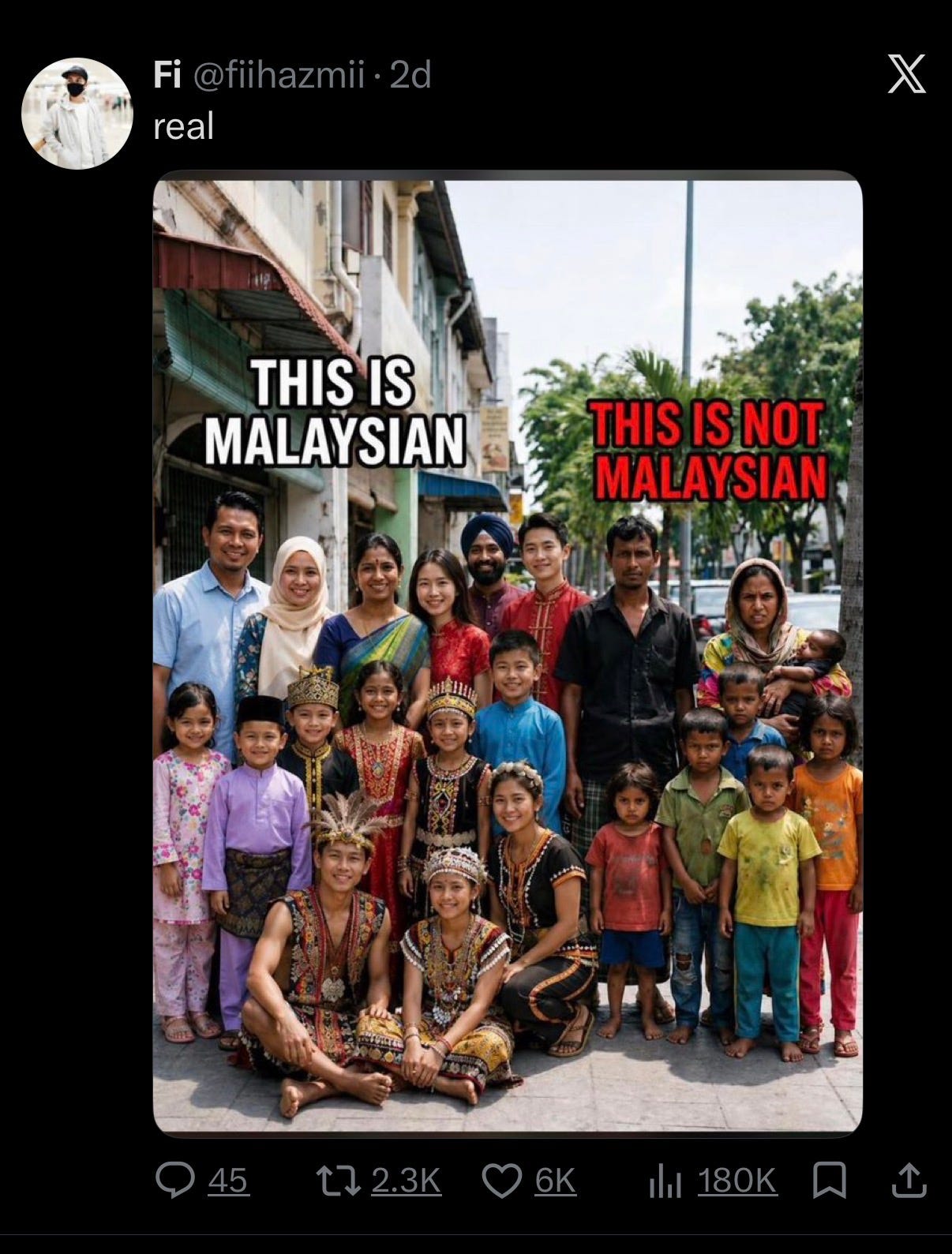
See the graphic above. On the left, “Malaysian” is presented as clean, smiling, colourful, respectable multiculturalism. “Not Malaysian” is represented by poor, dark-skinned, displaced-looking people with tired children. So the line is not really about citizenship. It is about class, race, poverty and who gets to look like they belong.
The idea is to sanitise racism as patriotism. So Malaysia’s diversity is celebrated when it is useful for tourism posters and national branding. But the moment vulnerable migrants or refugees enter the picture, the same society suddenly discovers borders, disgust and moral panic.
This is how xenophobia becomes a street-level technology. It tells ordinary people that they are entitled to inspect, classify and suspect others. So that public space becomes a checkpoint and people become immigration police. And then let the mob do the rest.
The first poster even says that if someone’s identity is uncertain, it is safer to use the general term “foreigner”.
Safer for whom? Not for the person being labelled.
In the current climate, “foreigner” is not a neutral description. It is a category for suspicion. It is the word people use when they want to avoid the responsibility of knowing who someone is. It allows Bangladeshis, Rohingya, migrants, refugees and stateless people to be pushed into one disposable mass.
That is exactly the logic that has always endangered Rohingya in Malaysia and across the region.
When Rohingya are repeatedly described as illegal, foreign, burdensome, PATI, or a security problem, rather than as people with rights, it should not be surprising when harassment and intimidation follow.
This is why Malaysian civil society organisations were right to warn that anti-Rohingya hate is no longer confined to the digital sphere. Community leaders have reportedly received threats. Personal information and home addresses have been circulated online. Families are living in fear. The lie that Rohingya are demanding citizenship, power or territory has been used to inflame public anger.
The lie that Rohingya are demanding citizenship, power or territory has been used to inflame public anger.
And now identification graphics are circulating. That should frighten anyone who knows how these things develop.
Rohingya have already survived the politics of identification. In Myanmar, identification was never a harmless bureaucratic act. It determined citizenship, movement, food, marriage, education, healthcare, policing, detention and survival. Rohingya know what happens when the state and the crowd become obsessed with who belongs and who does not.
They know what happens when documents become weapons. Rohingya know what happens when neighbours are invited to identify “the outsiders”. They also know what happens when a people are first named as a problem and then treated as removable.
Malaysia should know this too. Wang Kelian should have been enough. The mass graves on the Malaysia–Thailand border were not an accident of nature. They were the result of a regional system that treated Rohingya and other migrants as illegal, disposable and tradable. When states deny people legal protection, traffickers and mobs understand the message perfectly.
Attack the Messenger
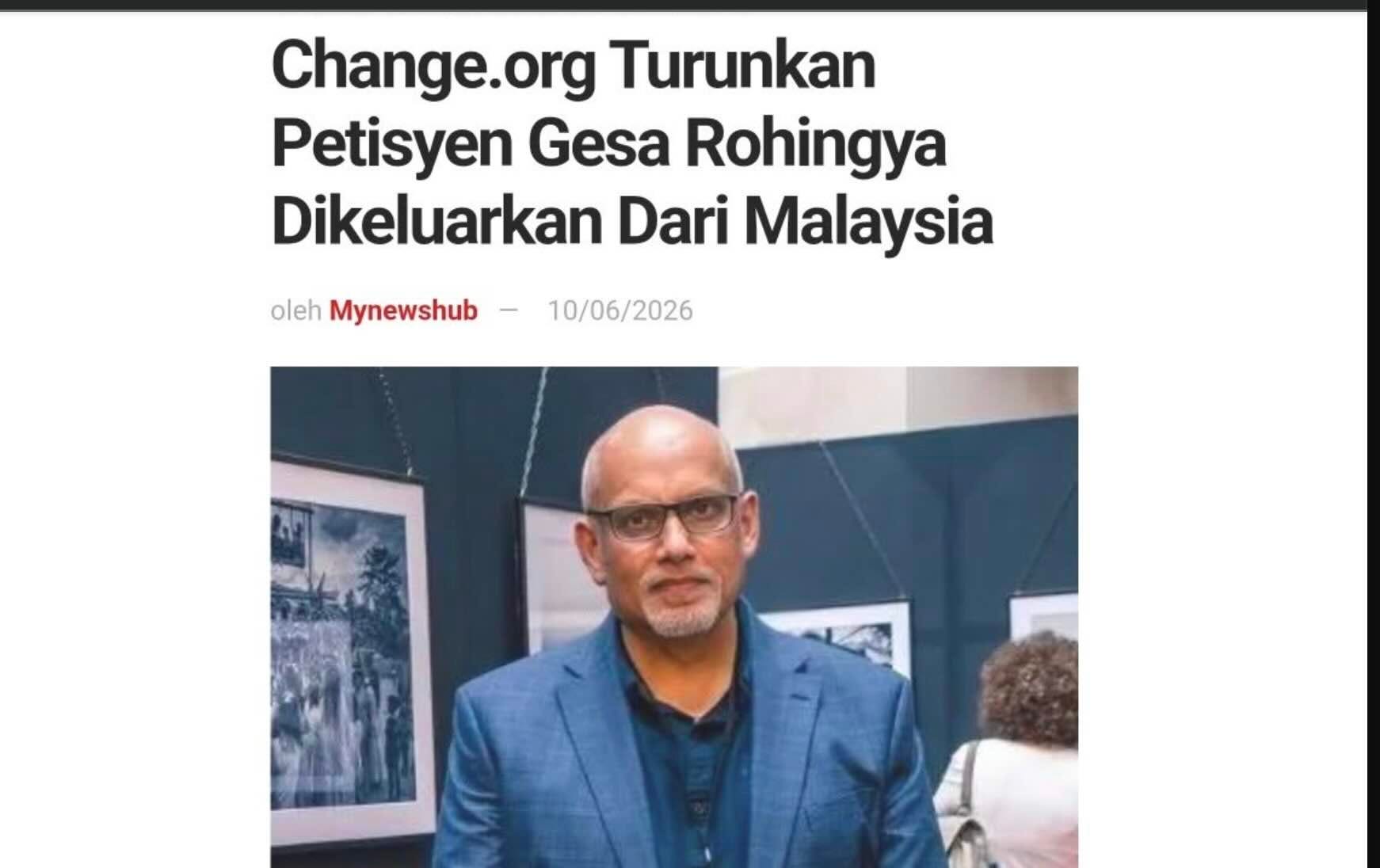
The backlash to my own small role in this episode has been instructive. Several Malaysian outlets identified me as the journalist who wrote to Change.org asking for the petition to be reviewed and removed. One MyNewsHub report was relatively straightforward - it noted that I had argued Change.org was not merely a passive platform, because hosting the petition gave it reach, legitimacy and momentum. That is exactly the point.
But beneath that and similar posts in other outlets came the revealing part - thousands of comments, many of them not debating refugee policy at all, but demanding the closure of UNHCR Malaysia, calling Malaysia “not a transit country”, telling me to take Rohingya into my own home, accusing me of being Rohingya, a foreign agent, a UNHCR stooge, sharing gifs of a face spitting at me, or worse.
This is the atmosphere the petition helped summon. The comments were not the language of sober policy disagreement. They were the vocabulary of expulsion - “halau balik”, send them back; “tutup UNHCR”, close UNHCR; “Malaysia bukan negara transit”, Malaysia is not a transit country. Others went further, treating Rohingya as disease carriers, lawless intruders, criminals, ungrateful guests, or people who had dared to ask for “equal rights”. The repetition itself became a kind of chant. Close UNHCR. Remove them. Send them away. Shut up, foreigner. Take them to your house. Keep Rohingya on your bald head etc.
It is a mob rehearsing its lines.


The same logic is now circulating visually. One graphic tells Rohingya to “sila berambus dari negara kami” - please get lost from our country - over an image of a crowded boat approaching Malaysia. Another meme circulates a supposed quote from Min Aung Hlaing implying that Malaysians will now understand why Rohingya were eliminated. Its purpose is obvious - to turn genocide into vindication. These images strip away the polite vocabulary of the petition. The petition said resources, security and humane solutions. The memes say what that language was always preparing - get out, disappear, you do not belong here, genocide was ok.
The precise chronology matters less than the atmosphere now taking shape. The petition, the abusive comment sections, the calls to shut UNHCR, the profiling graphics, the island fantasies (calls to move Rohingya and even UNHCR to an isolated island), the boat memes and the expulsionist slogans all belong to the same political milieu. They feed one another. They tell the public that Rohingya are not refugees with rights, but a problem to be identified and removed. It is a climate of racial panic, moving across platforms and becoming more confident with each repetition.
That is why the warning needs to be sounded clearly. When a society begins asking how to distinguish one vulnerable brown Muslim migrant from another, when people joke about “slapping the wrong one”, when refugees are portrayed as an invading mass, and when UNHCR itself becomes a target of public rage, the danger is no longer confined to social media. The petition page is down. But the wider campaign it helped legitimise is still alive. It must be confronted now before the question “who are they?” becomes the prelude to “what should we do to them?”
Join my WhatsApp Channel for news, documents, videos and images.
Related Articles:
When “Removal” Means Erasure for Rohingya

Editor’s note: This guest post by Rohingya human rights defender Razia Sultana responds to the Malaysian petition demanding the “removal” of Rohingya refugees. Razia Sultana writes from the perspective of a Rohingya activist and researcher, and connects the petition to a wider regional history of refoulement, trafficking, land loss and erasure.
Decoding Malaysia’s Anti-Rohingya Petition

An online petition calling for the “removal” of Rohingya refugees from Malaysia has rapidly gathered (at the time of writing) over 130,000 signatures in four days. Addressed directly to Prime Minister Anwar Ibrahim, its title is …
The Anti-Rohingya Turn in Malaysia’s Online Spaces
·
13 Jan
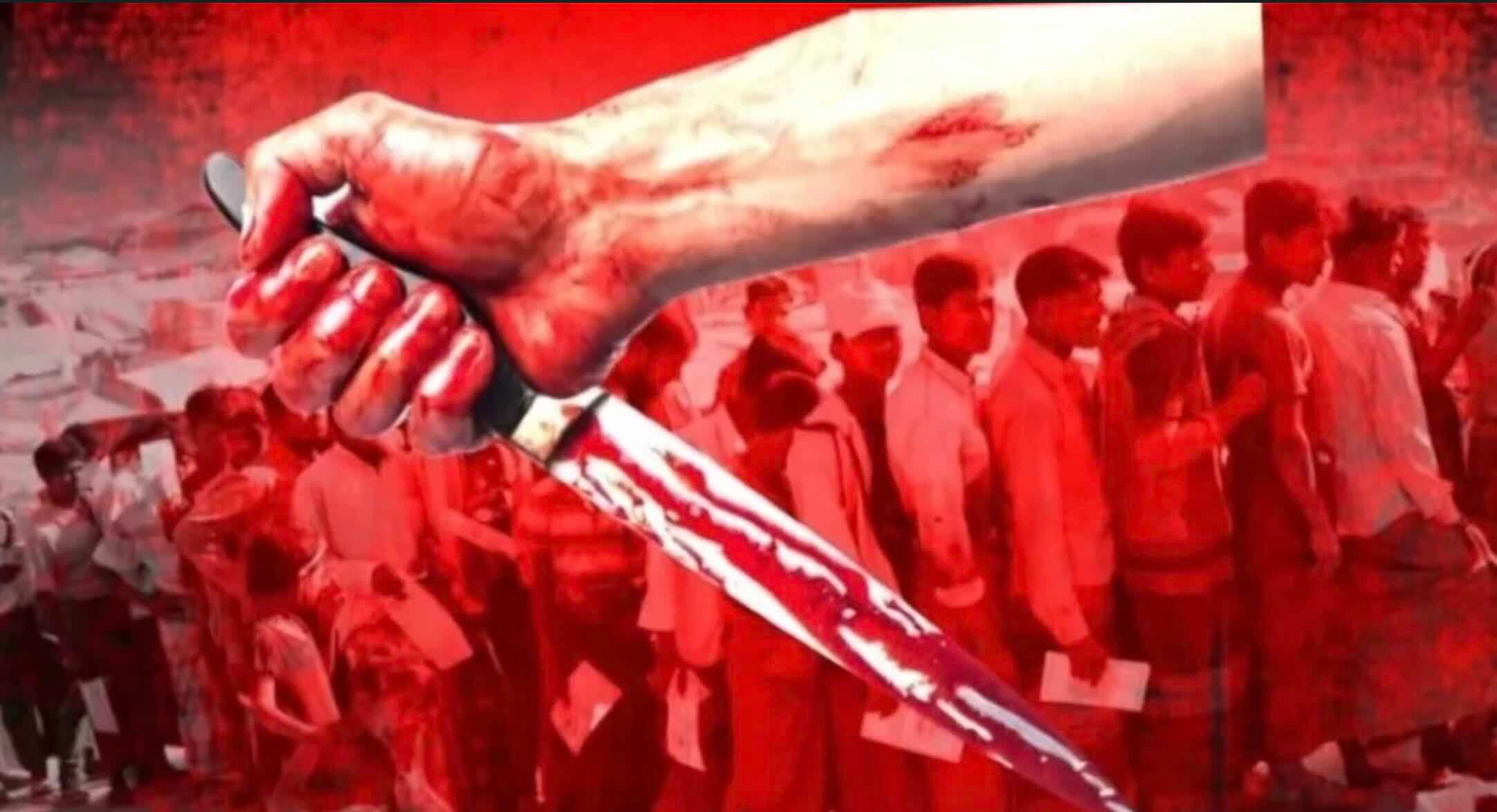
Content warning: This post contains racist and anti-refugee language (quoted for documentation), and references to incitement and violence.
What Malaysia Isn’t Asking About Rohingya Boat Deaths
·
20 November 2025
New Podcast Episode
Revisiting Malaysia’s “Respectable Deportations” of the Rohingya
·
17 November 2025
Reading recent Malaysian coverage of the Langkawi boat tragedy, I keep find…